New from M4P · Baseball and softball
What the best development programs know, in one playbook.
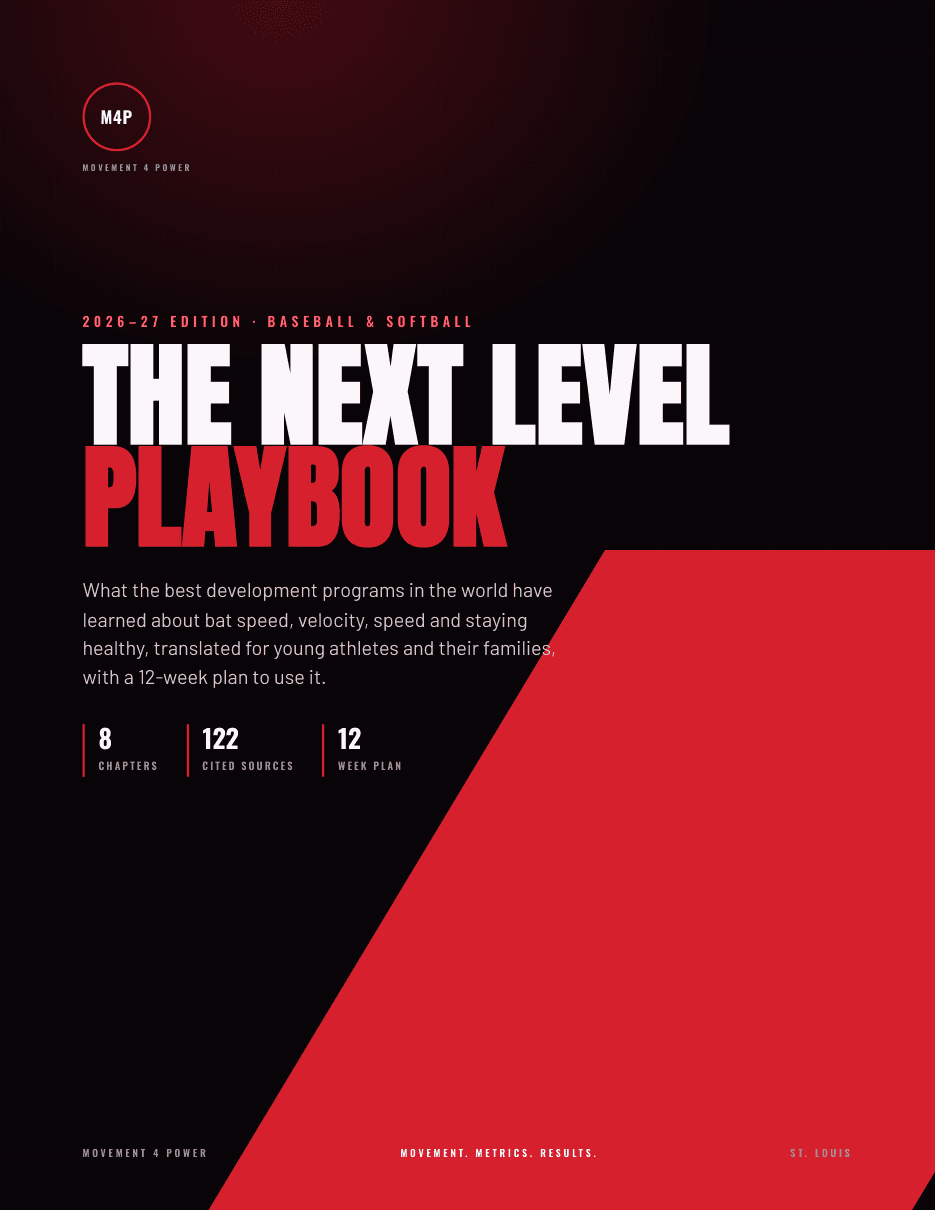
The top player-development labs measure everything, train with intent and retest. The Next Level Playbook shows you what they have learned about bat speed, velocity, speed and arm health, what is safe for a young athlete, and gives you a 12-week plan to use it.
- Pages
- 51Pages
- Cited sources
- 122Cited sources
- Week plan
- 12Week plan
- Chapters
- 8Chapters
The problem
Most young athletes do not plateau from a lack of effort.
Practice that does not show up in games
Hundreds of tee swings and bullpens, and the game swing looks the same. The research on how skills transfer explains why, and what to change.
Numbers nobody explains
Bat speed, attack angle, spin rate, exit velocity. Sensors are everywhere now. Most families get the readout without the meaning.
Chasing velocity at the arm's expense
Throwing harder is the goal, and arm injuries in young players are the cost nobody wants. The guidance on workload is clear, and most programs ignore it.
Why we wrote it
The pros stopped guessing. Families can too.

Connor Jenkins
Founder of M4P · former Division I commit · High School Director, Southside Prospects
Every athlete who trains at M4P starts the same way: we measure, we build a plan from the numbers, we train, and we retest. That loop is what the best development programs in the world run, and it is why their athletes improve on purpose instead of by accident.
Most families never see that loop. They see a drill on social media, a sensor readout, a radar number, and no way to connect them. So we went through the published research from the labs and coaches leading the field, kept what holds up, flagged what is hype, and wrote down what a young athlete can actually use.
The result is the guide we wish every parent had before paying for a single lesson.
What's inside
Eight chapters. One system.
The development gap
How the best programs work now: measure, individualize, train with intent, retest. And why most youth practice does not transfer.
Bat speed is the engine
What MLB's bat tracking settled, what the overload and underload studies actually found, swing decisions, and practice that carries into games.
Velocity without borrowing against the arm
How velocity is built, what the 2024 MLB injury report found, weighted balls honestly, pitch counts and rest by age, and the pitch-design numbers.
The athletic engine
Strength, rotational power, speed and jumping for young athletes: what the position statements say, and how it carries to bat speed and throwing velocity.
Recovery and workload
Sleep, fueling, pain red flags and year-round throwing: the unglamorous chapter that keeps the other four working.
The numbers decoder
What every reading on Blast, HitTrax, Rapsodo and a radar gun means, which ones matter at which age, and published benchmarks with their sources.
The 12-week Next Level plan
A test day at weeks 0, 6 and 12, weekly structures for hitters, pitchers and two-way players, and the rules for when to progress.
The parent's playbook
How to judge a trainer or program, the questions to ask, the red flags, and where your money goes furthest.
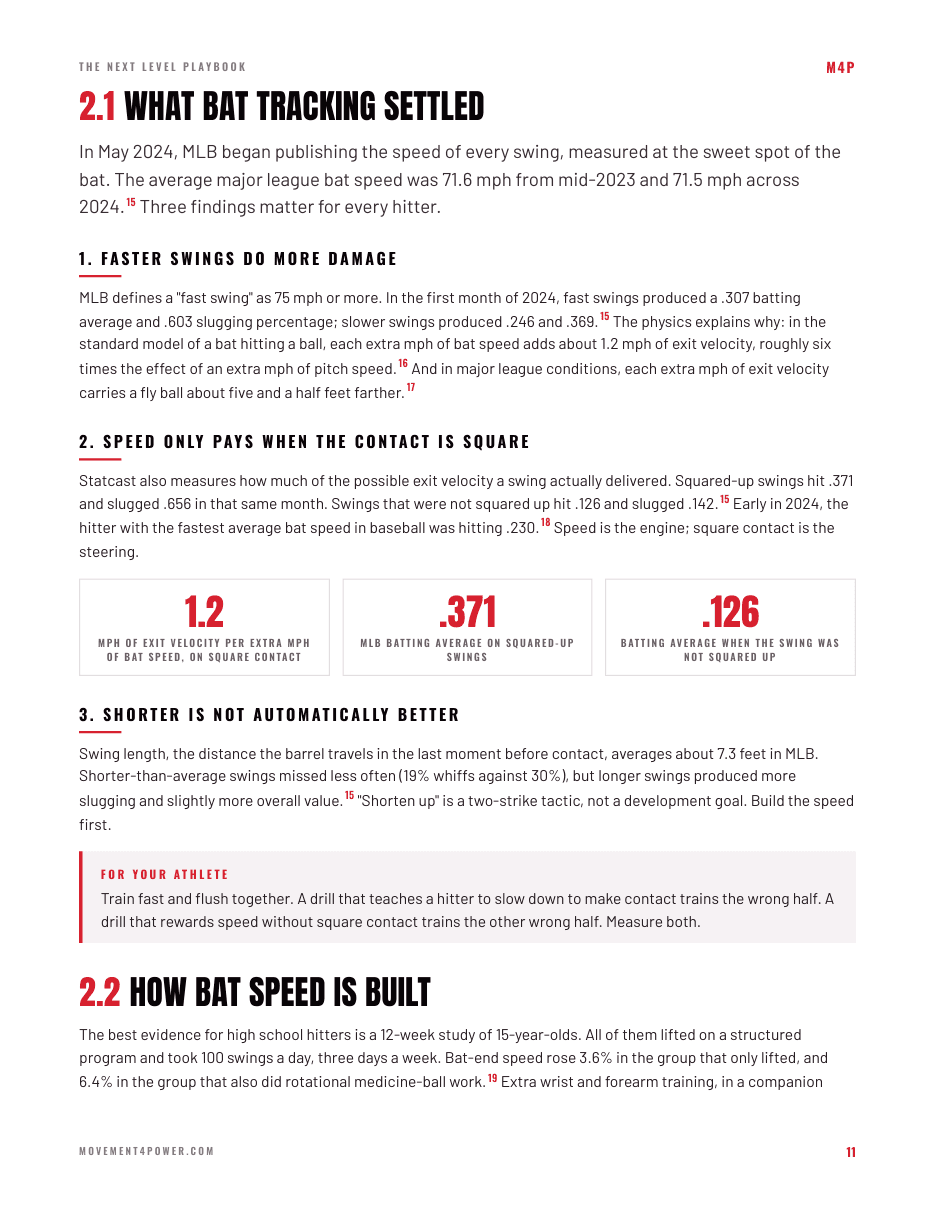
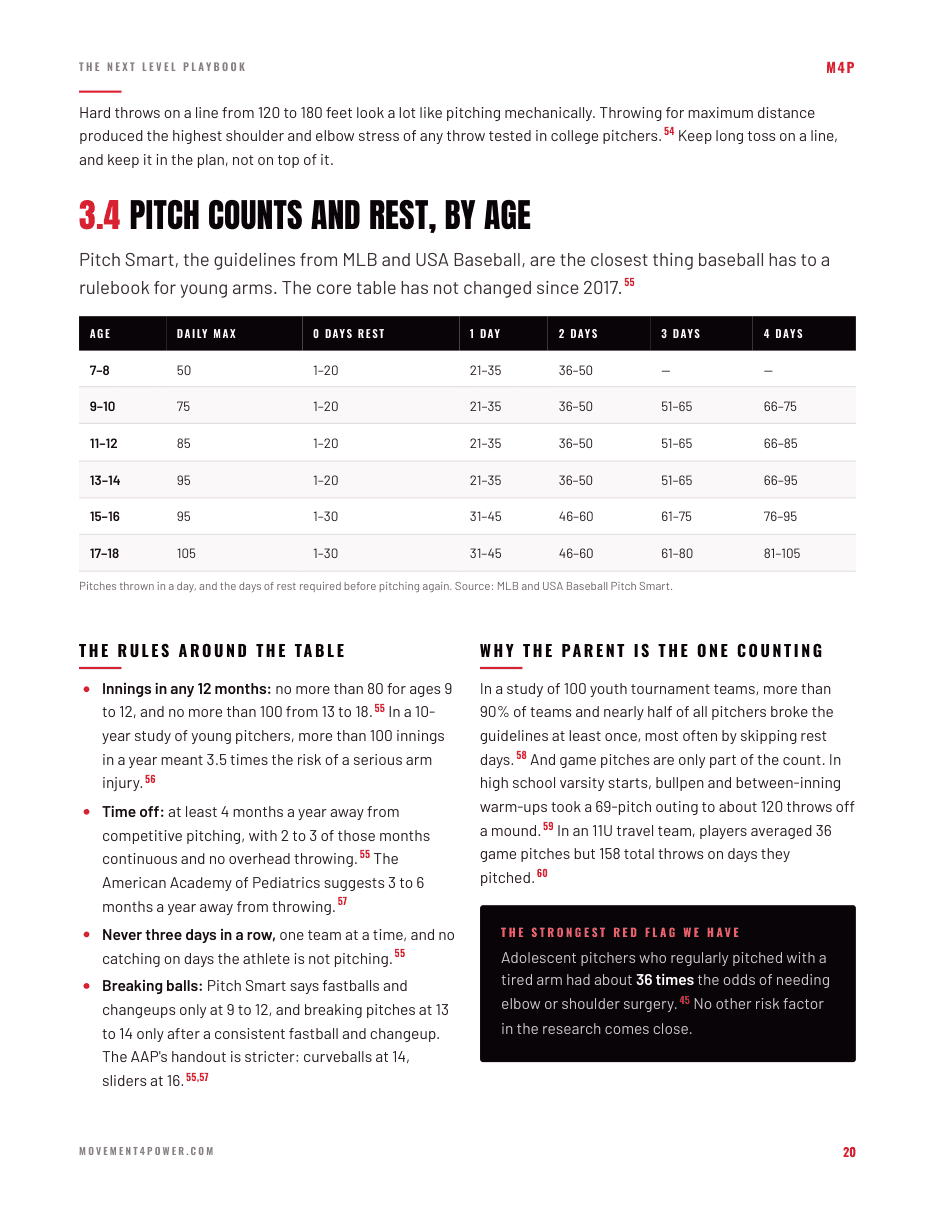
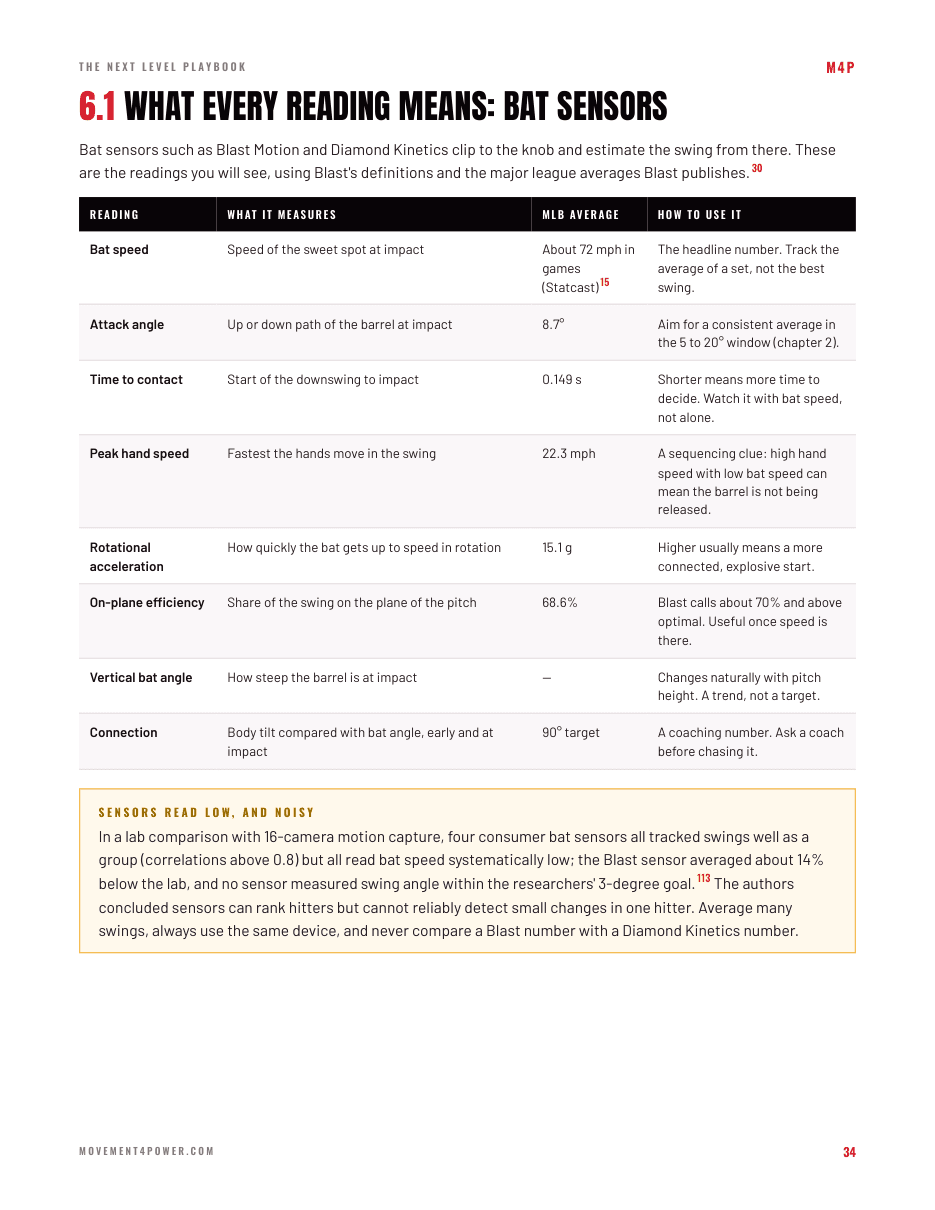
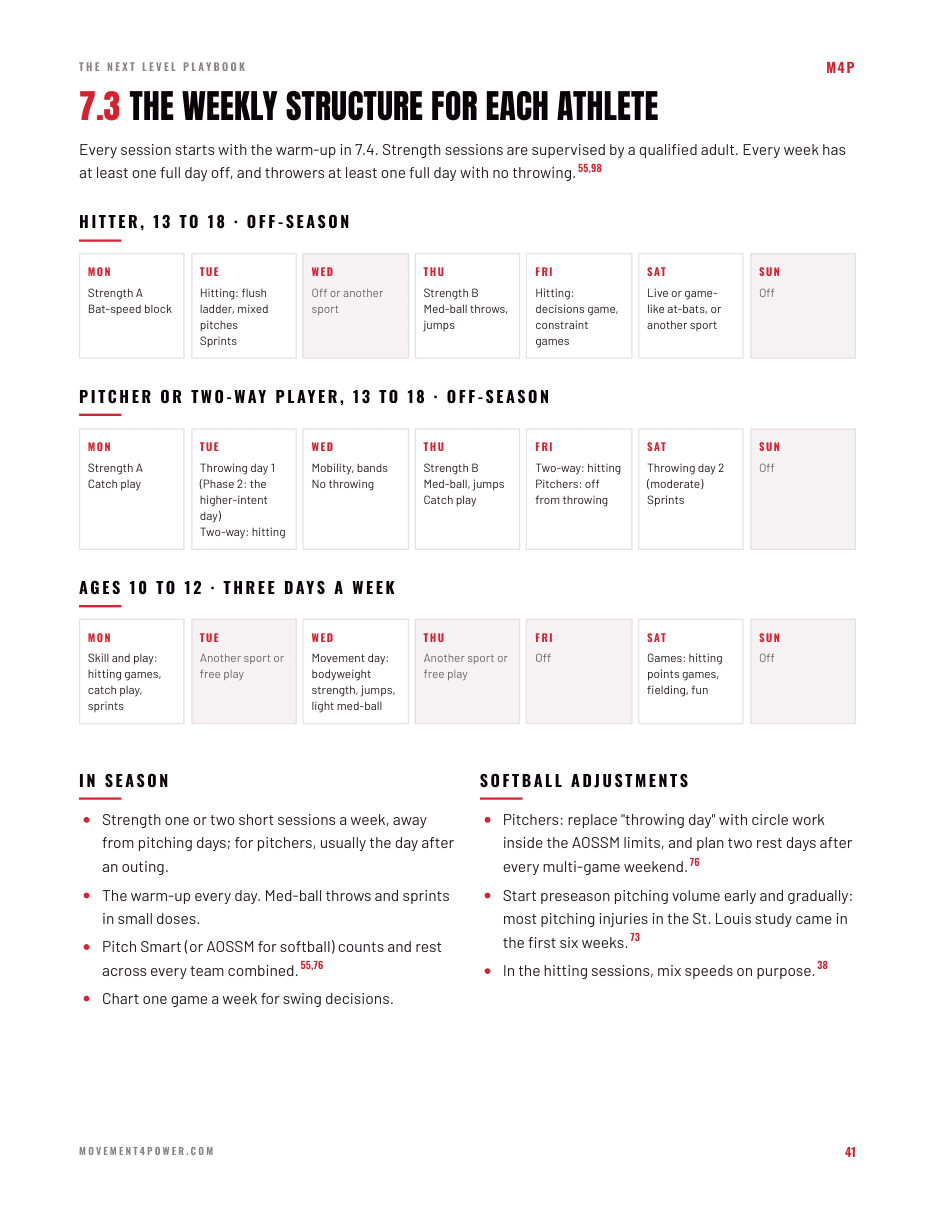
Real pages from the playbook. Delivered by email as a PDF once your payment clears: within a few hours, next morning at the latest. Read it on a phone or print it.
Built on the research
Every claim has a source.
The playbook draws on published research and public material from the labs, governing bodies and coaches leading the field, and lists every source at the back so you can read further. Where the evidence is thin, it says so.
- Driveline Baseball
- Tread Athletics
- MLB and USA Baseball Pitch Smart
- MLB Statcast
- American Sports Medicine Institute
- National Strength and Conditioning Association
- Cressey Sports Performance
- Advanced Therapy & Performance (Josh Heenan)
- American Academy of Pediatrics
- AOSSM STOP Sports Injuries
- Peer-reviewed journals
Movement 4 Power is not affiliated with or endorsed by any organization or coach cited. Names are used only to credit their published work.
What it is not
Honest about its limits.
- Not a weighted-ball or max-intent throwing program for kids. It explains that research; it does not prescribe it to minors without a coach.
- Not a replacement for an assessment. It shows you the loop; a coach measuring your athlete in person closes it.
- Not affiliated with, or endorsed by, any lab or coach it cites. Their published work is credited as the source.
The offer
Everything you get for $27
- The Next Level Playbook (PDF)
- Hitting, throwing, strength and speed, and recovery chapters
- The numbers decoder for Blast, HitTrax, Rapsodo and radar readings
- A 12-week plan with a test day at the start, middle and end
- The full source list, so you can check any claim yourself

Optional at checkout · +$17
The Next Level Tracker · 21 printable pages
The printable companion: every test-day scorecard and weekly log for the 12-week plan, so the numbers get written down instead of remembered. Added to the same file.
For comparison, at M4P today
- Remote Assessment$125
- One 4-week digital program$59
- The Next Level Playbook$27
Different products, real prices: what each one sells for on this site.
30 days to decide
If the playbook is not what you expected, email us within 30 days of purchase and we will refund it in full. You do not need to return or delete the file. That is the same refund policy every M4P digital program carries.
Delivered by email as a PDF once your payment clears: within a few hours, next morning at the latest. Read it on a phone or print it.
Questions
Before you order
Who is it for?
Parents of baseball and softball players roughly 10 to 18, and high school athletes who want to own their development. The plan scales by age, and every chapter says where an idea does not apply to younger players.
Does it work for softball?
Yes, with honest limits. Hitting, strength, speed, recovery and the numbers apply to both sports. The throwing chapter is built mostly on baseball research, because that is where most of the published work is, and it says so wherever softball differs.
When do I get it?
Your download link comes by email once your payment clears, usually within a few hours and next morning at the latest. The link works for 30 days, and the file is yours to keep.
Is it safe for a younger athlete?
That was the first rule we wrote it under. It follows the published pitch-count and rest guidance by age, it explains weighted-ball and high-intent throwing research without prescribing it to minors, and it lists the pain signs that mean stop and see a clinician.
Do I need equipment?
No. Every week of the plan can run with a bat, balls, a tee and open space. If you have a bat sensor, a radar or access to a cage with HitTrax or Rapsodo, the numbers decoder shows you how to use them.
Are you affiliated with Driveline, Tread or the other sources?
No. The playbook cites their published research and public material as sources, the way a good report should. None of them has reviewed or endorsed it.
How is this different from your free guides?
The free guides are two to seven pages each and cover one topic. The playbook is the full system: the research behind hitting, throwing, strength and recovery, the numbers decoder and the complete 12-week plan.
We are in St. Louis. Should we just book an assessment?
If you can get to Center STL, an in-person assessment is the best next step, and the playbook makes it more useful: you will know what we are measuring and why. Many families do both.
In St. Louis? See the in-person assessments.